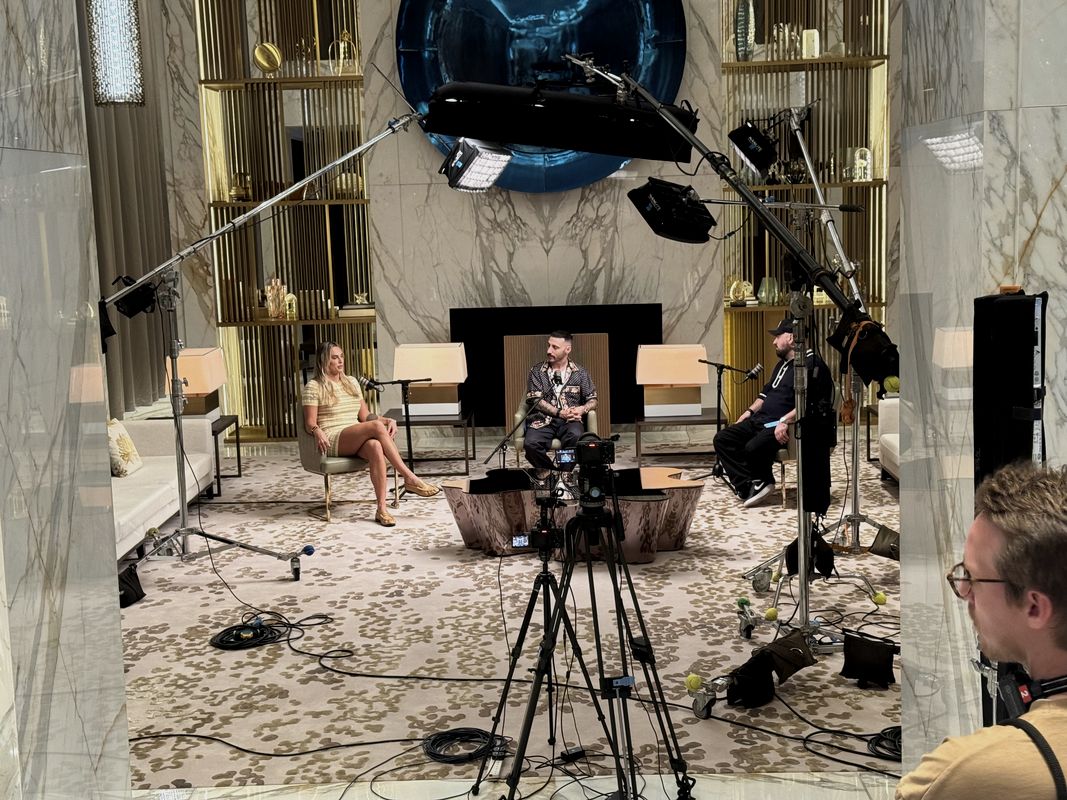
Broadcast-quality multi-camera setups with live switching, replay, and graphics overlay.
DWTC's Sheikh Saeed Halls feature pre-installed camera grids and dedicated OB truck bays, making it the region's most broadcast-ready venue for multi-camera productions. The center hosts over 80 trade exhibitions annually including GITEX and Arab Health, each requiring up to 12-camera setups with instant replay capabilities for product launches and surgical demonstrations. Its in-house fiber ring connects all 21 halls, allowing fluid camera roaming and centralized production control.
Built for global broadcast coverage during Expo 2020, this venue retains permanent multi-camera infrastructure including robotic rail cameras and 360-degree capture platforms at Al Wasl Plaza. The site now hosts mega-conferences and concerts where our 12-camera configurations can work with the existing broadcast compound and satellite farm for international distribution. The unique architecture demands specialized camera angles that our live switching teams have refined through hundreds of hours of production experience on-site.
This resort's Arabian-themed conference spaces require discreet multi-camera positioning that respects the aesthetic while delivering broadcast quality for high-level government summits and luxury brand launches. Our teams utilize wireless camera systems and compact broadcast units to handle the venue's waterways and traditional architecture without disrupting the guest experience. The Fort Island amphitheater specifically demands creative camera placement for outdoor productions during Dubai's winter event season.
As the UAE's only purpose-built multi-format performing arts theatre, Dubai Opera demands precise multi-camera choreography for live broadcasts of opera, ballet, and concerts with zero tolerance for visual intrusion. The venue's broadcast bridge and dedicated production suite allow our teams to execute complex live switching with graphics overlay for Arabic and English titling simultaneously. Its orchestra pit camera positions and motorized point-of-view systems require specialized expertise that our Dubai-based crews have developed through years of residency productions.
The Middle East's largest indoor arena presents unique multi-camera challenges with its 17,000 capacity and 270-degree seating bowl requiring comprehensive crowd coverage alongside stage action. Our 12-camera configurations here emphasize instant replay systems for sports entertainment and music concerts where social media clipping is essential for real-time audience engagement. The venue's central broadcast location and power distribution eliminate the infrastructure challenges common in temporary arena builds elsewhere in the region.
Dubai's venues have collectively invested over AED 2 billion in broadcast-specific infrastructure since 2015, creating an environment where multi-camera productions can operate with broadcast truck connectivity, permanent fiber networks, and dedicated production suites. This eliminates the costly temporary infrastructure required in other regional markets, allowing budgets to focus on camera count and creative execution rather than basic connectivity. Our productions at Expo City and DWTC regularly put to work these permanent installations to deliver faster setup times and higher technical reliability.
Dubai's unique position between East and West has cultivated technical crews fluent in live switching workflows that simultaneously serve Arabic, English, and often Hindi or Mandarin audiences through real-time graphics overlay and dedicated program outputs. Our directors understand the framing conventions and cultural sensitivities required when cutting between international speakers, regional dignitaries, and diverse audience reactions. This expertise is essential for events like Gulfood and Arab Health where a single production must serve live screens in the venue while feeding distinct broadcast versions to MENA, European, and Asian markets.
With 500+ major events annually and a concentrated October-May high season, Dubai offers unmatched opportunities for production companies to refine multi-camera workflows through continuous high-stakes execution. This density has created a competitive community where only teams delivering flawless live switching with instant replay and dynamic graphics survive—raising standards across the entire market. Our crews benefit from this constant practice, arriving at your production with recent experience from comparable events at the same venues.
Multi-camera productions during Ramadan must accommodate shifted event timings, with major conferences often running 21:00-03:00 to accommodate fasting schedules and post-Iftar attendance. Camera crews and switching directors should plan for reduced daytime setup windows and ensure all team members understand the cultural protocols for capturing prayer breaks and modest dress requirements in audience shots. Pre-event testing becomes critical as technical rehearsals may need to compress into shortened preparation periods.
Dubai's June-September outdoor temperatures exceeding 45°C demand specialized camera protection and crew welfare protocols that directly impact multi-camera positioning and operator rotation schedules. Outdoor productions at venues like Expo City require weather-sealed broadcast compounds with aggressive cooling, while camera positions must account for heat haze affecting long lens shots. Indoor venues during this period often run aggressive air conditioning that creates condensation risks when moving equipment between environments—plan buffer time for equipment acclimatization.
All multi-camera productions in Dubai require National Media Council permits for filming and international satellite uplink, with specific restrictions on capturing certain government buildings, military installations, and religious sites visible from venue positions. Drone cameras, increasingly popular for arena productions at Coca-Cola Arena, need separate General Civil Aviation Authority approvals that require 4-6 weeks lead time. Our Dubai-based production managers maintain current relationships with these authorities to expedite permitting for time-sensitive conference productions.