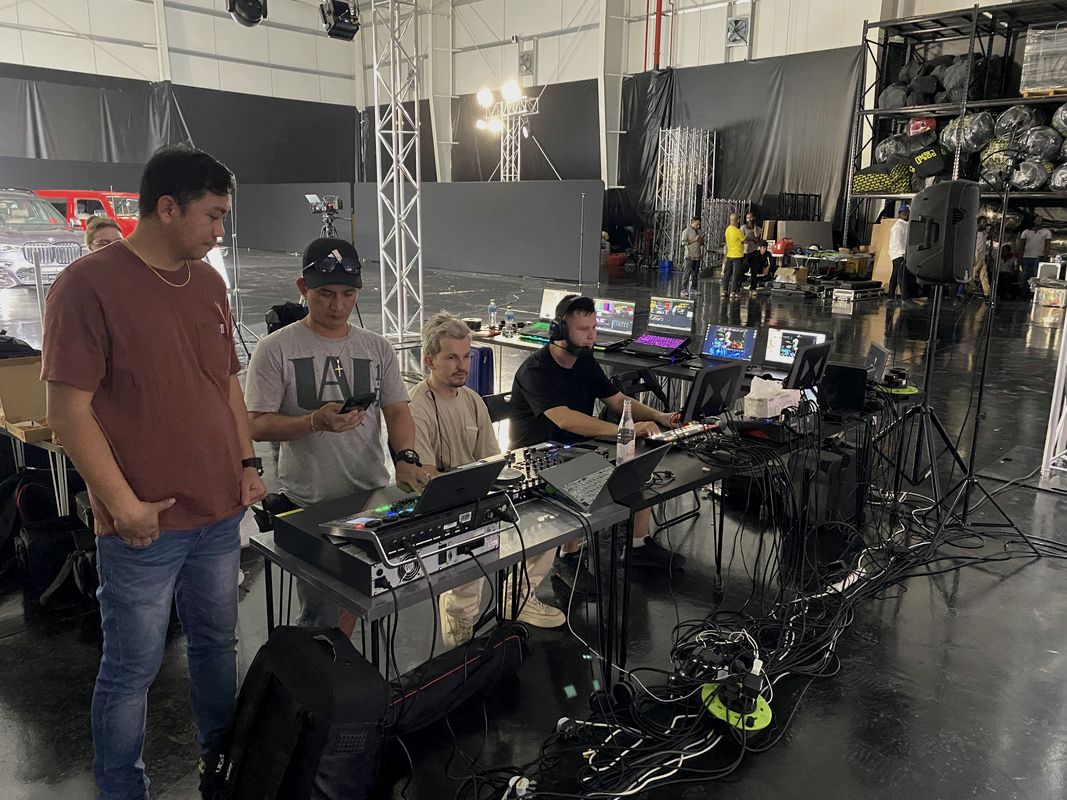
Television-grade production with OB vans, satellite uplinks, and experienced crews.
DWTC offers dedicated broadcast galleries with direct fiber connectivity to Etisalat's media exchange, enabling 4K/8K transmission without signal degradation. The venue's Sheikh Saeed Halls feature ceiling-mounted rigging points specifically engineered for broadcast lighting grids, while the adjacent Za'abeel Hall provides 12,000 sqm of pillar-free exhibition space ideal for large-scale studio builds. DWTC's in-house technical team includes certified fiber technicians who coordinate directly with OB van operators for fluid integration.
Built on the infrastructure of Expo 2020, this venue retains its broadcast-ready fiber ring connecting all pavilions with 100Gbps capacity—rare redundancy for live productions. The Al Wasl Plaza's 360-degree projection surface doubles as an immersive backdrop for hybrid events, while dedicated broadcast compound areas accommodate up to six OB vans simultaneously. The site's smart city architecture includes pre-cabled camera positions throughout, reducing rigging time by 40% compared to conventional venues.
This resort complex offers unique waterfront broadcast opportunities with its Arabian architecture providing distinctive visual context for international feeds. The Madinat Arena's loading dock accommodates full-size OB trucks with direct venue access, while the adjacent beachfront enables satellite uplink positioning with clear southern arc visibility—critical for C-band transmission to Asian and European satellites. The venue's private setting allows for restricted broadcast zones essential for high-profile government or royal events.
Dubai's largest indoor arena features a broadcast compound designed specifically for entertainment sports production, with 48-camera capacity and dedicated slo-mo replay positions. The venue's proximity to Dubai Media City—just 15 minutes via dedicated broadcast corridor—enables rapid crew mobilization and equipment staging from major rental houses. Its roof structure supports 80-ton broadcast cranes, while under-seat fiber connectivity eliminates cable runs across audience areas.
This dhow-shaped venue presents unique broadcast challenges solved through custom acoustic isolation and broadcast lighting integration that preserves the hall's renowned acoustics. The venue's compact footprint requires specialized compact OB configurations, with pre-installed fiber to a rooftop satellite farm offering dual-path redundancy. Dubai Opera's programming of international touring productions demands broadcast crews experienced with theatrical lighting transitions and orchestra pit audio capture.
Dubai's position at 55° East longitude provides optimal satellite coverage for simultaneous transmission to Europe, Africa, and Asia—reducing latency for global live events. The Dubai Media City satellite earth station offers C-band, Ku-band, and Ka-band uplink with teleport services from Arabsat, Nilesat, and Yahsat. This geographic advantage means a single Dubai uplink can reach 80% of the world's population within one satellite hop, eliminating complex multi-hop routing that degrades signal quality.
Etisalat's Media Hub in Dubai Media City operates the region's only dedicated broadcast fiber exchange, with dark fiber connectivity to all major venues and direct international links to London, Frankfurt, and Singapore. The UAE's fiber penetration exceeds 95%, enabling reliable contribution feeds from virtually any location in the emirate. For producers, this means guaranteed bandwidth with SLA-backed latency under 50ms to European points of presence—essential for live interview circuits and remote production workflows.
Dubai's broadcast crew pool has evolved alongside its event calendar, developing specialized expertise in medical congress production for Arab Health, technology showcase formats for GITEX, and food industry programming for Gulfood. The city hosts permanent technical teams from BBC Studios, NEP, and regional specialists like NOMOBO and Done Events, ensuring crew availability even during peak season. English serves as the production lingua franca, while Arabic, Hindi, and Tagalog capabilities are standard for multi-language event coverage.
During Ramadan, government and corporate events shift to evening hours, creating compressed setup windows and requiring crew scheduling adaptations. Iftar timing affects venue access—many locations prohibit load-in during the hour before sunset—and broadcast catering must accommodate fasting crew members. Plan satellite window bookings early, as Ramadan evening programming creates peak demand on Middle East satellite capacity, particularly for sports and entertainment feeds targeting the region's post-iftar viewing surge.
May through September temperatures exceeding 45°C demand specialized OB van cooling protocols—standard European specifications often fail without supplemental HVAC. Position satellite trucks with southern exposure minimized, as dish motors and LNBs are vulnerable to thermal shutdown. Venue compound areas at Dubai World Trade Centre and Expo City include shaded broadcast bays with 32A three-phase power, but confirm availability 48 hours ahead as these are allocated on first-committed basis during summer months.
All broadcast equipment entering Dubai requires Temporary Importation status through Dubai Customs—engage a local ATA Carnet agent or risk 5% duty assessment on equipment value. The National Media Council mandates accreditation for all on-camera personnel and key technical crew; processing takes 3-5 business days and requires passport copies with UAE visa stamps. For multi-venue productions, request a blanket site permit covering all Dubai locations rather than individual venue approvals, which streamlines police coordination for satellite truck parking and cable routing.